Pied-à-terre tax rolls ahead despite battle

When asked what power the Council had to assist homeowners with the rollout of the tax, Council member Gale Brewer, a supporter of the tax, answered that the oversight committee’s function is to ask questions about implementation.
“It is a shame that the City can’t own up to its own mistakes and admit that it has badly botched the rollout of this surcharge,” Mastro said in a statement. “Instead, the administration is doubling down, going to court to ensure that it can continue harassing and threatening New York City homeowners who clearly are permanent residents – something the City would know if it would only do its homework.”
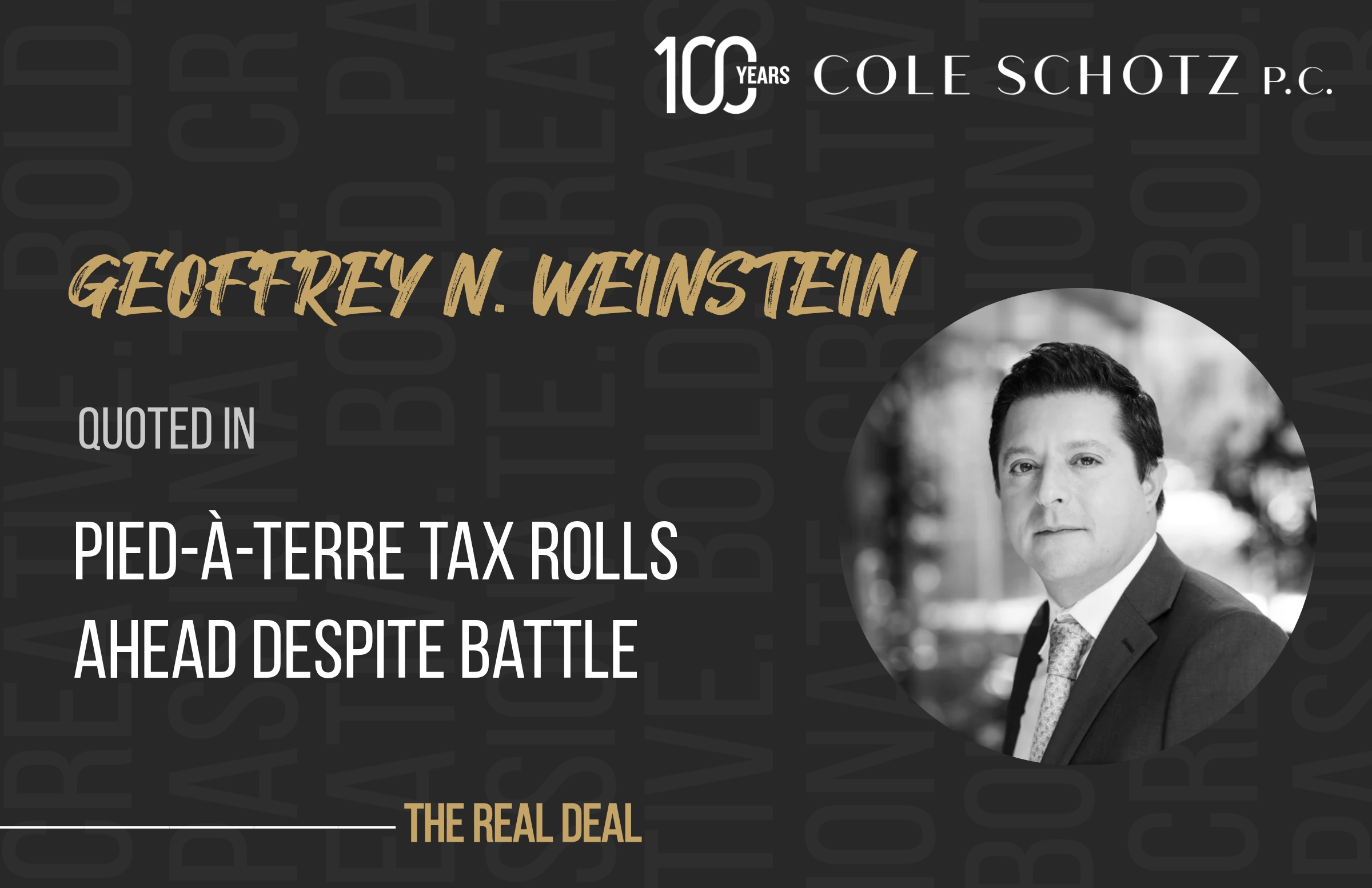
Even the Mastro-led suit does little to undermine the policy itself, instead arguing plaintiffs were wrongly named in the initial tranche of properties, according to Geoffrey Weinstein, a member of Cole Schotz P.C.’s tax, trusts and estates department.
“Presumably, that relief is for New York City to go back and pare down the list, maybe rescind the initial notices and reissue to those who are either subject to the tax,” Weinstein said. “The court would have to weigh the harm of casting this wide net, versus what would likely be a prolonged delay in collecting receipts, which [New York] is counting on for the budget.”
As of Aug. 18, homeowners had started 9,884 applications for exemptions and completed 5,001, with the city approving 2,318 exemptions.
“One thing about implementing these wealth taxes for a very specific group, say half a percent of the one percent, is that these people have resources, they can hire the best tax lawyers, best accountants, and they’re prepared to allocate these resources to fight any inequities,” Weinstein said. “What you’re going to see is a lot of challenges to value, and then the question is going to be, does the city have the resources to hire its own appraisers?”
To read the full article, click here.
As the law continues to evolve on these matters, please note that this article is current as of date and time of publication and may not reflect subsequent developments. The content and interpretation of the issues addressed herein is subject to change. Cole Schotz P.C. disclaims any and all liability with respect to actions taken or not taken based on any or all of the contents of this publication to the fullest extent permitted by law. This is for general informational purposes and does not constitute legal advice or create an attorney-client relationship. Do not act or refrain from acting upon the information contained in this publication without obtaining legal, financial and tax advice. For further information, please do not hesitate to reach out to your firm contact or to any of the attorneys listed in this publication. No aspect of this advertisement has been approved by the highest court in any state.

Related Articles
Join Our Mailing List
Stay up to date with the latest insights, events, and more