Federal Circuit Demands Clarity from USPTO Over F-Word Rejection

The 26 August ruling in In re Brunetti over the trademark FUCK marks a victory for US clothing designer Erik Brunetti, who previously won a landmark 2019 Supreme Court case that struck down the USPTO’s ban on “immoral” or “scandalous” marks. However, the latest decision represents a significant moment not for its handling of provocative language, but for its demand that the USPTO provide clear, consistent standards for all applicants
The Federal Circuit’s 2-1 decision delivered a sharp rebuke to the TTAB for failing to provide clear, actionable standards for determining when commonplace words fail to function as trademarks.
“The Board determined that Mr Brunetti failed to meet a standard, but it did not articulate what that standard would be,” the Federal Circuit wrote. “The Board’s decision is unclear as to the circumstances under which all-purpose word marks can be registered and which are ‘inherently incapable of being regarded as [a] source indicator,’” the court noted.
Instead, the TTAB’s reasoning suggests that it “has concluded that it need not articulate a viable registration standard”, the court said.
Brunetti previously made headlines for his battle to register the mark FUCT for various apparel. The USPTO initially refused registration on the grounds that the mark was scandalous/immoral, with the TTAB affirming. Brunetti appealed to the Federal Circuit, which found the banning of immoral/scandalous marks under Section 2(a) of the Lanham Act unconstitutional under the free speech clause of the First Amendment. The Supreme Court affirmed that position.
Brunetti’s latest case, however, focuses on an application for FUCK, which the office and the TTAB found failed to function as a trademark. Brunetti argued that the decision lacked sufficient clarity. The Federal Circuit agreed.
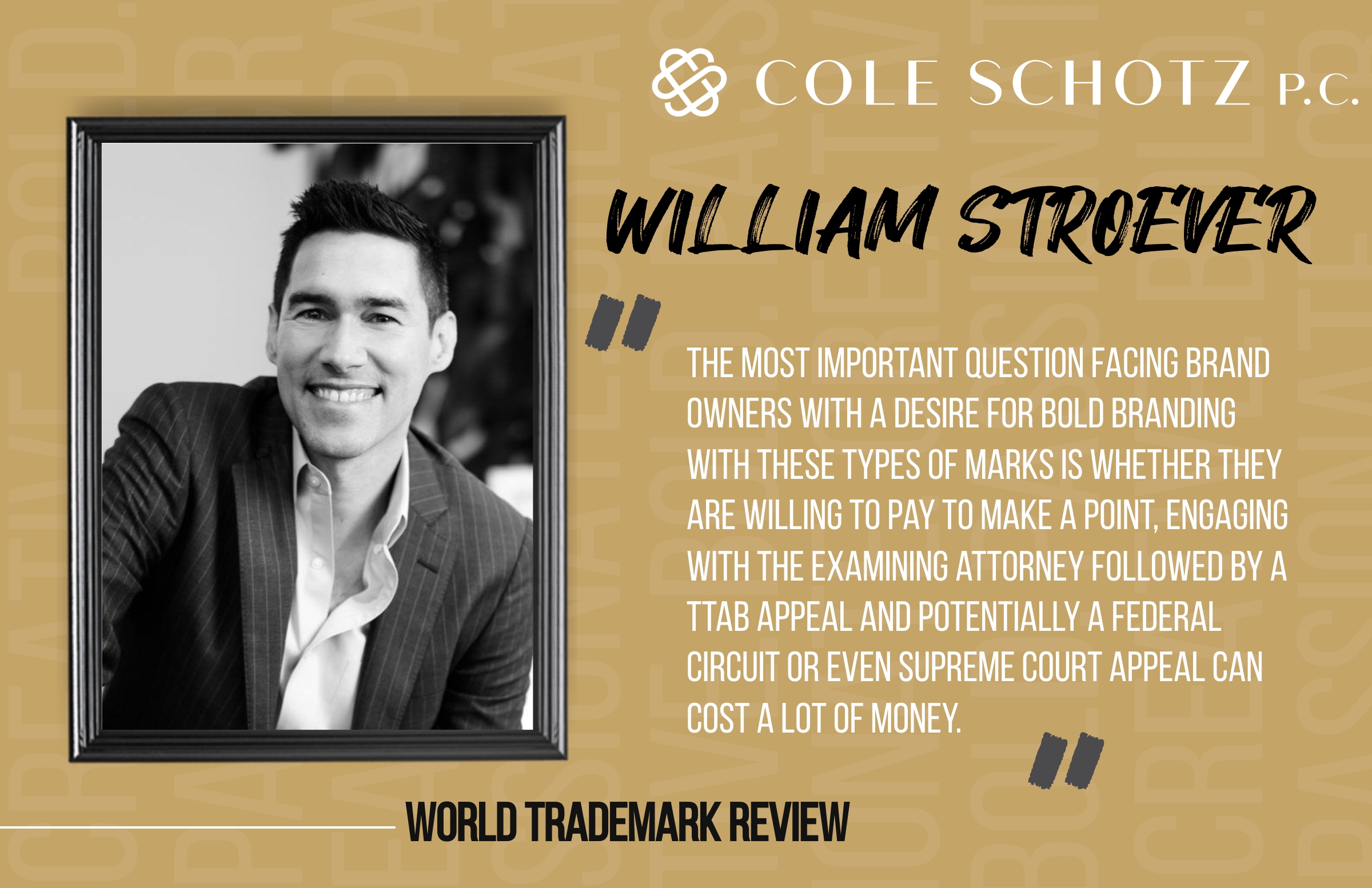
“The first big takeaway from the decision is the Federal Circuit’s mandate that the USPTO and TTAB provide clear actionable guidance to applicants on what types of evidence would be required to prove protectability,” states William W Stroever, member and co-chair of the IP department at Cole Schotz.
“The Federal Circuit commented that the TTAB provided no guidance on what kinds of evidence Brunetti could have provided in order to overcome the refusal,” Stroever notes.
Moreover, the court was particularly troubled by what it characterised as the TTAB’s ‘I know it when I see it’ approach to failure-to-function refusals. “Such an approach is inconsistent with the Board’s mandate to engage in reasoned decision making under the APA,” the decision stated.
Providing clear guidance to applicants on the types of evidence required to overcome such a refusal “is something that will help all future applicants as well as the courts”, Stroever insists.
“Another interesting takeaway that was almost thrown into the decision at the end was the criticism of the USPTO’s expanding ‘failure to function’ refusals,” Stroever continues.
To read the full article, please click here.
As the law continues to evolve on these matters, please note that this article is current as of date and time of publication and may not reflect subsequent developments. The content and interpretation of the issues addressed herein is subject to change. Cole Schotz P.C. disclaims any and all liability with respect to actions taken or not taken based on any or all of the contents of this publication to the fullest extent permitted by law. This is for general informational purposes and does not constitute legal advice or create an attorney-client relationship. Do not act or refrain from acting upon the information contained in this publication without obtaining legal, financial and tax advice. For further information, please do not hesitate to reach out to your firm contact or to any of the attorneys listed in this publication. No aspect of this advertisement has been approved by the highest court in any state.

Join Our Mailing List
Stay up to date with the latest insights, events, and more