ABC Test Proposal Under Threat in NJ Legislature


An attempt by state lawmakers in New Jersey to halt a proposed ABC test demonstrates a pathway to fighting independent contractor status analyses, after opponents have taken different approaches in other states.
Last week, three Republican legislators announced their intent to put forward a resolution to block a proposed rule by the New Jersey Department of Labor and Workforce Development that would codify an ABC test for independent contractor status. Independent contractors often lack benefits and protections mandated for employees, such as minimum wage and overtime pay.
While ABC tests in California and Massachusetts also faced opposition, in those places it came largely from outside state government and involved the ballot measure process. As more states codify such standards, some worker advocates fear that the Garden State legislation could provide a roadmap for fighting codification.
Those factors come from the New Jersey Supreme Court‘s 1991 ruling in Carpet Remnant Warehouse Inc. v. New Jersey Department of Labor and its 2022 ruling in East Bay Drywall LLC v. Department of Labor and Workforce Development, the agency said in April when it announced the proposed test, which would apply to New Jersey’s Unemployment Compensation Law, its Wage and Hour Law and its Wage Payment Law. The comment period ended Aug. 6.
Now the Republican-led legislation would declare the proposed rule “inconsistent with legislative intent,” and either prohibit its adoption or, if already finalized, invalidate the rule.
The legislation is “the only pathway” to avoid the rule, said John Shahdanian II of management-side firm Trenk Isabel Siddiqi & Shahdanian PC. “They have to put these resolutions forward to either reject or to amend what the administrative agency is doing,” he said.
Marchetti, who represented the workers in Hargrove v. Sleepy’s LLC in which the state justices held in 2015 that the ABC test for unemployment law applied to wage and hour law, said the legislative push isn’t surprising.
“I’m not surprised that there are some politicians who would like to push back against the ABC test, which would provide more protections to workers,” he said.
But Thomas Linthorst of management-side firm Morgan Lewis & Bockius LLP said the effort by lawmakers shows the proposed rule didn’t have the backing of state legislators. He described the proposed rule “as something of an end-run on the legislature.”
“The right way to have gone about it would be to push through a rule like this through the legislature or not at all,” he said. “Those in the legislature, including some from both parties that have opposed it, are now reacting to that effort to go around the legislature and reassert their authority.”
While three Republicans are behind the legislation, several Democratic state lawmakers have submitted public comments opposing the proposed rule.
Linhorst said the proposed rule would go beyond codifying what the courts have laid out.
“It’s essentially prejudging certain situations that haven’t necessarily been determined by the case law,” he said.
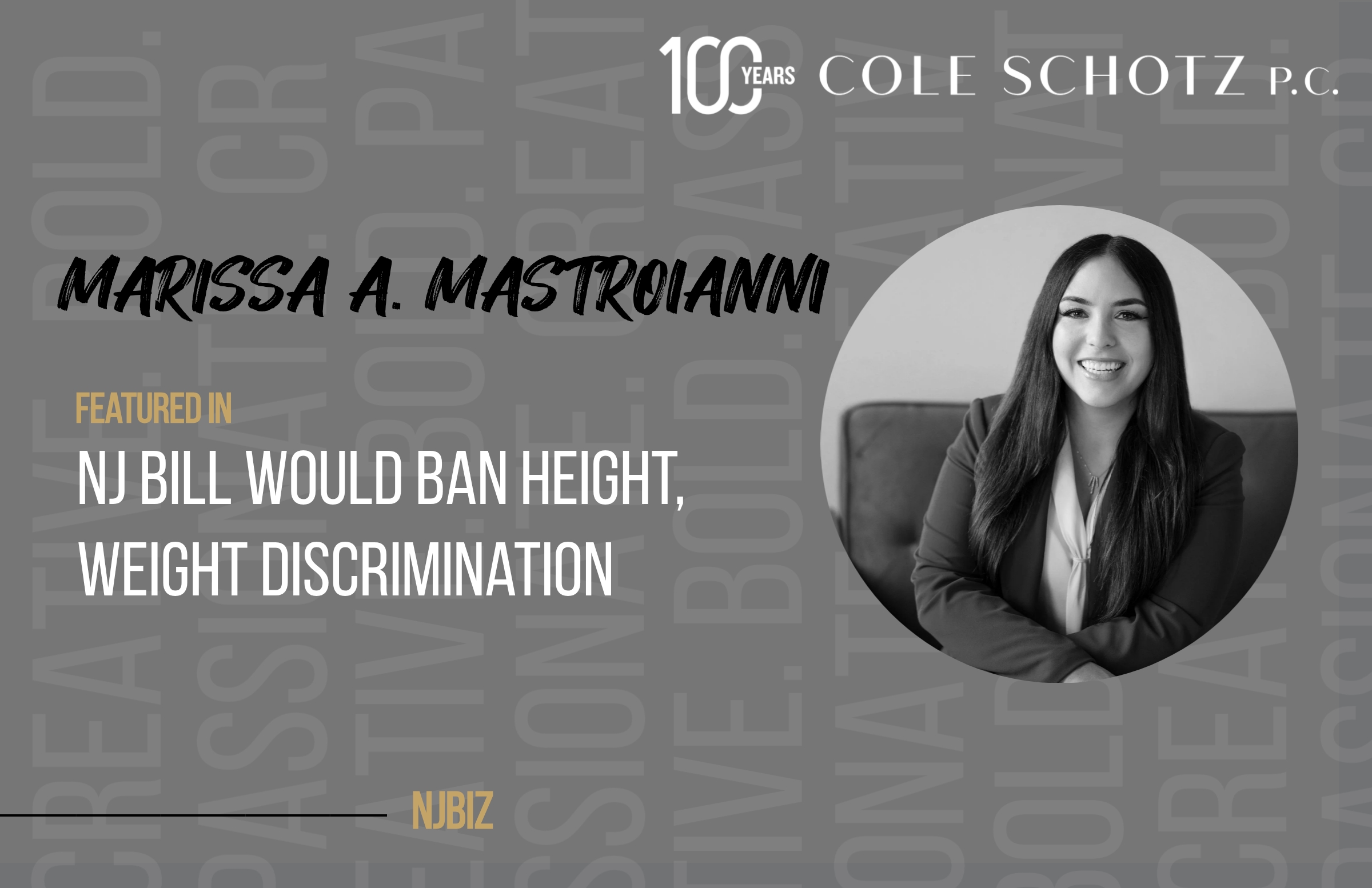
Another management-side attorney, Marissa Mastroianni of Cole Schotz PC, also said the proposed rule goes beyond the case law, particularly when it comes to prong B, regarding the performing of services outside the usual course of business or outside the place of business.
“Under the DOL‘s proposed rule, it’s really making it clear that what you may think is a company’s ‘place of business,’ or their principal line of business, could actually be a lot of different things,” she said. “Whereas the prior case law, it’s a little scant on this issue.”
Given prong B, for ride-hail companies, “if this rule does actually go into play, it will make it impossible for those companies to have independent contractors,” she said.
To read the full article, please click here.
As the law continues to evolve on these matters, please note that this article is current as of date and time of publication and may not reflect subsequent developments. The content and interpretation of the issues addressed herein is subject to change. Cole Schotz P.C. disclaims any and all liability with respect to actions taken or not taken based on any or all of the contents of this publication to the fullest extent permitted by law. This is for general informational purposes and does not constitute legal advice or create an attorney-client relationship. Do not act or refrain from acting upon the information contained in this publication without obtaining legal, financial and tax advice. For further information, please do not hesitate to reach out to your firm contact or to any of the attorneys listed in this publication. No aspect of this advertisement has been approved by the highest court in any state.

Join Our Mailing List
Stay up to date with the latest insights, events, and more